A Wedding in Sintra: Palaces, Gardens, and the Fairytale Side of Portugal
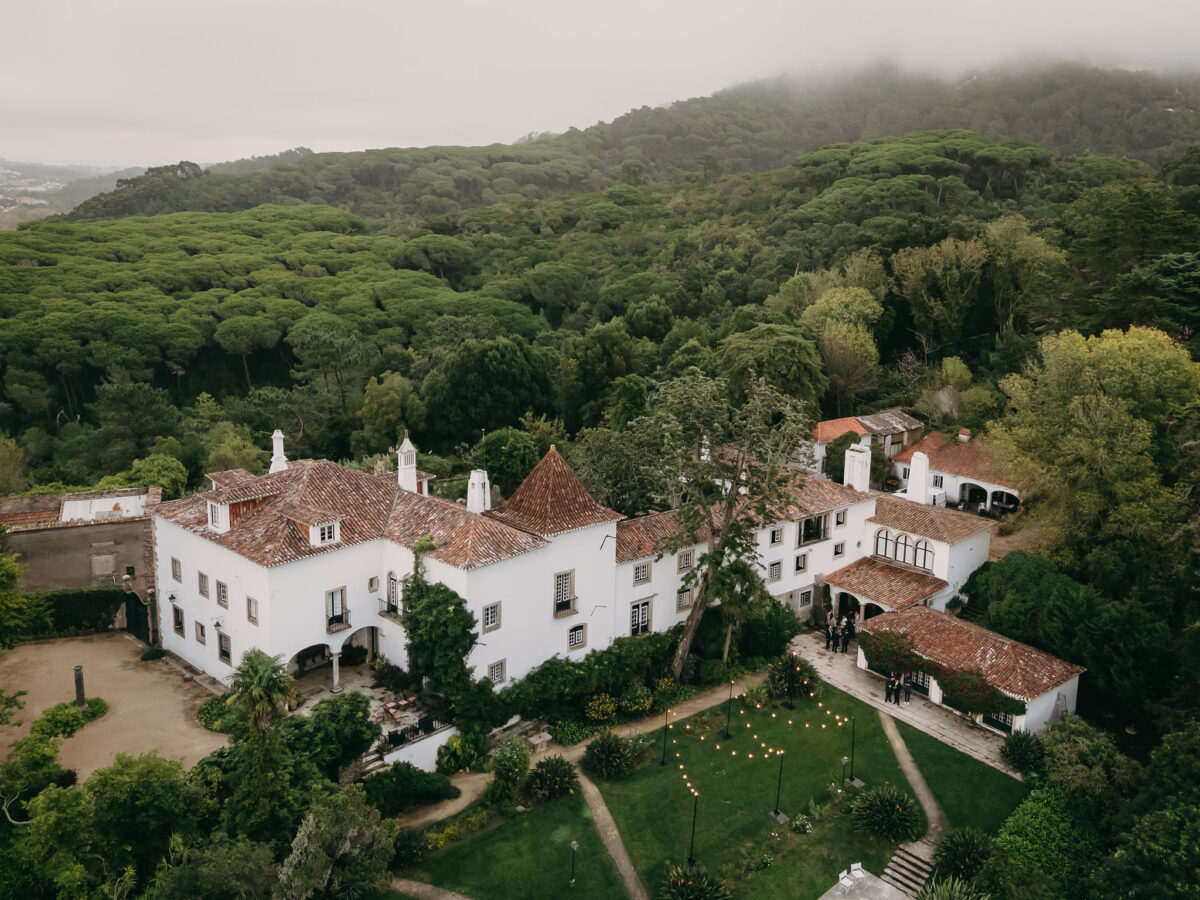
The first time most couples drive up into the hills for a wedding in Sintra, they go quiet. One minute you are on a normal road out of Lisbon, and the next the temperature drops a few degrees, the light turns green under the trees, and a palace appears on a ridge above you like someone drew it in. It is a strange and lovely feeling, and it is the reason this small town keeps showing up on shortlists from couples in Boston, London, and increasingly Dubai and Abu Dhabi.
After fifteen years planning weddings across Portugal, we can tell you Sintra is not a place you choose for convenience. You choose it because nothing else looks like it, and because you want your guests to feel that they travelled somewhere.
Why a wedding in Sintra feels different
Sintra sits inside a UNESCO World Heritage cultural landscape, the first of its kind listed in Europe. What that means in practice is a whole mountain of Romantic architecture, imported trees, moss covered stone, and gardens designed in the nineteenth century to feel like a dream. Pena Palace, Monserrate, the Moorish Castle, Quinta da Regaleira. Even if you never set foot inside any of them, they sit in the background of your photographs and change the whole mood of the day.
It is also compact. You are roughly forty minutes from Lisbon airport, twenty five from the coast, and close enough to Cascais that many couples split the weekend between the two. If you are still comparing regions, our notes on a wedding in Lisbon and on Cascais pair naturally with this one.
The venues: what is actually bookable
This is where we have to be honest with couples early. The famous palaces are managed by Parques de Sintra, Monte da Lua, and while some of their spaces can be rented for events, availability is limited, rules are strict, and public visiting hours shape your timeline. A ceremony in a palace garden is possible. A full reception with a band until two in the morning inside a national monument, usually not.
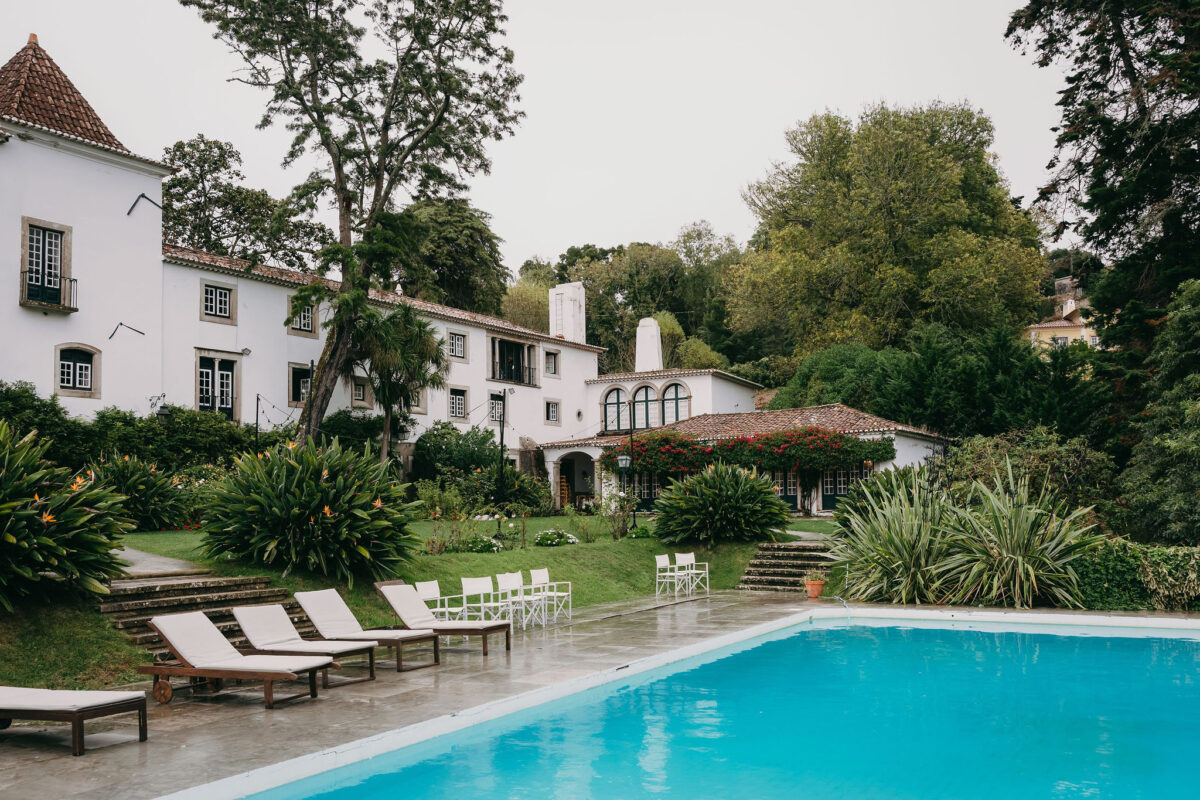
What works beautifully is the second tier, private quintas and estates on the slopes around the village, converted farmhouses with walled gardens, and boutique hotels with terraces facing the sea or the serra. These give you the Sintra atmosphere with the flexibility of a private venue. In many cases we build the day around a ceremony in one of the historic gardens and a dinner at a nearby quinta, with a short transfer between the two.
Weather, fog, and the practical side
Sintra has its own microclimate. That is not marketing language, it is a real planning factor. The hills catch Atlantic moisture, so you can be in bright sun in Lisbon and in soft mist here forty minutes later. Some of the most beautiful images we have seen came out of that fog. It is also colder than the coast in the evening, which matters for an outdoor dinner and for what your guests bring.
Late May through early October is the safest window. September is our quiet favourite, warm days, fewer tour buses, and light that lasts. Whatever month you pick, we always build a covered alternative into the plan, and we never treat it as a downgrade.
What rain actually looks like: Marie and Mathew
We think about Marie and Mathew every time a couple asks what happens if it rains in Sintra. On their day, it rained. Properly. And it changed nothing about how that wedding felt, because they decided early that they were going to enjoy whatever the day gave them, and everyone around them followed.
The plan shifted, we moved things under cover, and the party carried on. By the end of the night people were in the pool. That is the honest answer to the rain question. Sintra weather is part of the deal here, and the couples who have the best time are the ones who stop fighting it and lean into the mood of the day. A good plan B is our job. The rest is atmosphere.
Two more practical notes. Roads in the historic centre are narrow and traffic in peak season is genuinely slow, so guest transport needs to be organised rather than left to taxis. And accommodation fills early, because the town is small and half of it is booked by day visitors and short stays.


The legal side, wherever you are coming from
Marrying legally in Portugal is very doable, and the process is the same in Sintra as anywhere else in the country. You file with the Conservatória do Registo Civil, submit translated and legalised documents, and receive authorisation that is valid for a set period. Requirements depend on your nationality and residence, so couples living in the United States, the UK, or the Emirates will each have a slightly different document list. The Portuguese government portal has an official page on marriage in Portugal, and we walk clients through it step by step.
Plenty of couples also choose to handle the legal registration at home and hold a symbolic ceremony here, which we can officiate. That removes the paperwork pressure entirely and lets the day be about the words you actually want said.
Planning a Sintra wedding from far away
Most of our couples have never seen their venue in person before the site visit, and some never see it at all before the wedding week. That works because we do the walking for you, send honest video, and negotiate directly with suppliers in Portuguese. Budget wise, Sintra sits closer to Lisbon pricing than to the interior, so expect venue and accommodation costs above what you would find inland. Our breakdown of what a wedding in Portugal actually costs is a useful starting point even if the region is different.
If a wedding in Sintra is the picture in your head, we’d love to hear about it. Tell us your dates, roughly how many people, and what matters most to you, and we will tell you honestly whether Sintra is the right fit or whether somewhere else in Portugal would serve you better. You can see how we work on our services page, or just get in touch here and we will take it from there.
Photos by Conta-me como foi