Douro Valley Wedding Questions: What International Couples Ask Us Most
Most of the Douro Valley wedding questions we receive arrive in the same week a couple first opens a map of northern Portugal and realises the region is further from Porto airport than the photos suggest. Over fifteen years of planning weddings here, the questions have barely changed, and neither have our answers. Couples write to us from Texas, from London, from Dubai and Abu Dhabi, and they all want the same thing: to know what they are actually signing up for before they fall in love with a quinta on Instagram.
So here are the honest answers, without the polish.
The Douro Valley wedding questions about paperwork and legality
This is almost always the first message. Can we legally marry in Portugal if neither of us is Portuguese? Yes, you can. Portugal allows foreign couples to marry here, and the process runs through the Conservatória do Registo Civil, with official guidance published by the Portuguese government on ePortugal. What varies is how long your own country takes to issue the documents you need, and whether they require an apostille and a certified translation.
The second question follows immediately: will it be recognised back home? For couples from the US, the UK, and for those living in the Emirates who hold passports elsewhere, a Portuguese civil marriage is a real marriage, recognised where you live. Some couples still choose to handle the legal side quietly at home and treat the day in Portugal as a symbolic ceremony, which I officiate myself. Neither option is better. It depends on how much paperwork you want in your wedding week. We wrote more about the documents and timing in our Portugal wedding FAQ.
How do our guests actually get there?
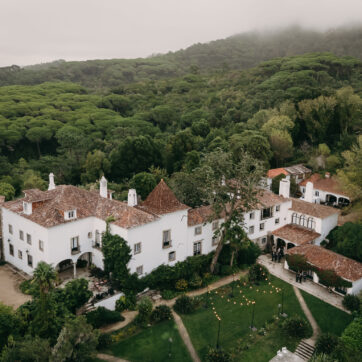
Everyone flies into Porto. From there, the drive into the Douro is roughly ninety minutes to Régua or Lamego, a little less to Penafiel or Castelo de Paiva, which sit on the near edge of the valley and are often overlooked. That drive is not a problem, it is part of the experience, but it does need planning. We arrange shuttles for every wedding, because the roads are narrow, winding, and your guests will be drinking Douro wine.
The related question is where everyone sleeps. Quintas in the valley are beautiful and small. A property that seats a hundred for dinner might only have fourteen bedrooms. We usually build a plan with the couple and closest family staying at the venue, and the rest of the group split between Régua, Lamego, Pinhão, or Porto itself with transport arranged. Couples who want everyone under one roof sometimes end up choosing Vila do Conde or the Vila Nova de Gaia side of the river instead, where hotel capacity is larger.
What does it cost, and when should we come?
The budget question deserves a full answer rather than a range dropped into a paragraph, so we broke it down properly in our post on how much a Douro Valley wedding costs. The short version: Portugal is still better value than most of Western Europe, but the Douro specifically has become expensive over the last few years. Prime Saturdays in September book eighteen months out and the best quintas price accordingly.
On timing, harvest season is spectacular and everyone knows it, which is exactly the problem. May, June and early October give you warm light, softer prices, and venues that are not juggling three other weddings that month. If you are travelling from the Gulf and used to real heat, August in the Douro will still surprise you, the valley traps warmth between the hills and afternoons regularly pass thirty five degrees.
Can we plan all of this from the other side of the world?
Yes, and most of our couples do. Around eighty per cent visit Portugal once before the wedding, usually for two or three days of venue and vendor meetings that we schedule back to back. The rest we handle over video calls, shared documents and a lot of photographs taken on our phones at exactly the hour of day their ceremony will happen. The planning timeline for a destination wedding in Portugal maps out what happens in which month, which is usually the thing that settles people’s nerves.
One last question, asked less often than it should be: is the Douro the right region for us at all? The valley is a UNESCO World Heritage cultural landscape, which is part of why it feels the way it does, and also part of why building and access are restricted. If your priority is a large guest list, easy logistics, or a coastal setting, the north has other answers, from Amarante and Gerês inland to Viana do Castelo on the Costa Verde. Our complete Douro Valley wedding guide goes deeper into who the region really suits.
Still have a question we did not cover?
Send it to us. There is no such thing as a question that is too small, and we would rather answer forty of them by email than have you guessing. If you are starting to picture your wedding somewhere in this valley, get in touch with Amor Pra Sempre / MM Weddings and tell us what you are imagining. We would love to help you build it.