The Portuguese Table: Why Your Wedding Guests Will Remember the Food as Much as the Ceremony
I still remember a wedding in the Alentejo where the bride’s grandmother did not cry during the vows. She cried when the lamb came out of the wood oven, the smell reaching the garden before the dish ever touched the table. That is the thing about a Portuguese table. It has its own way of holding a room, long before anyone thinks to call it tradition.
What a Portuguese Table Actually Is
In fifteen years of planning weddings here, I have learned that guests forget the exact wording of a toast far sooner than they forget the bread that showed up before anyone asked for it, still warm, next to a small dish of olive oil and a glass of wine poured a little too generously to be polite. A Portuguese table does not wait for permission to be generous, and that sets a tone for the whole evening before a single speech is made.
What Guests From Far Away Notice First
Couples who grew up in the United States, or who now live somewhere like Dubai or Abu Dhabi, tell me some version of the same thing almost every time. Nobody is rushing them. Courses arrive slowly, in no hurry to clear the table for the next part of the night, and the conversation gets louder, not quieter, as the hours pass. For many of their guests, that slowness is the part of the trip they bring up months later, more than the view or the photographs.
The Table Changes With the Region
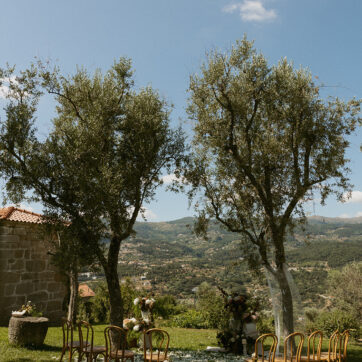
Part of why I keep sending couples to different corners of the country is exactly this. A wedding in the Alentejo tastes like bread soup, cork oak shade and wine that has had all the time it needs. A wedding on the Algarve coast leans toward grilled fish straight off the coals and citrus still on the branch. And in the Douro, where I started this work, the table sits inside the vineyard itself, so the wine in the glass and the hillside in front of you are, quite literally, the same place. It is no accident that Portugal’s official tourism board points to food and wine among the main reasons travelers fall for the country in the first place.
None of this needs to be complicated to be felt. A good Portuguese table mostly needs someone who knows which door to knock on, and the patience to let the meal take as long as it wants. If you are curious what that could look like for your own day, I would love to hear about it.